
In the poultry industry, the “Late Peak Period” is often the most challenging phase for farm profitability. Just as a sunset follows the rise, laying hens eventually transition from their peak production into a stage where physiological performance naturally declines.
However, “decline” doesn’t have to mean “loss of profit.” By understanding the nutritional shifts required for aging hens, farm managers can slow down the reduction in laying rates and maintain premium eggshell quality.
1. The “3-Up, 3-Down” Phenomenon
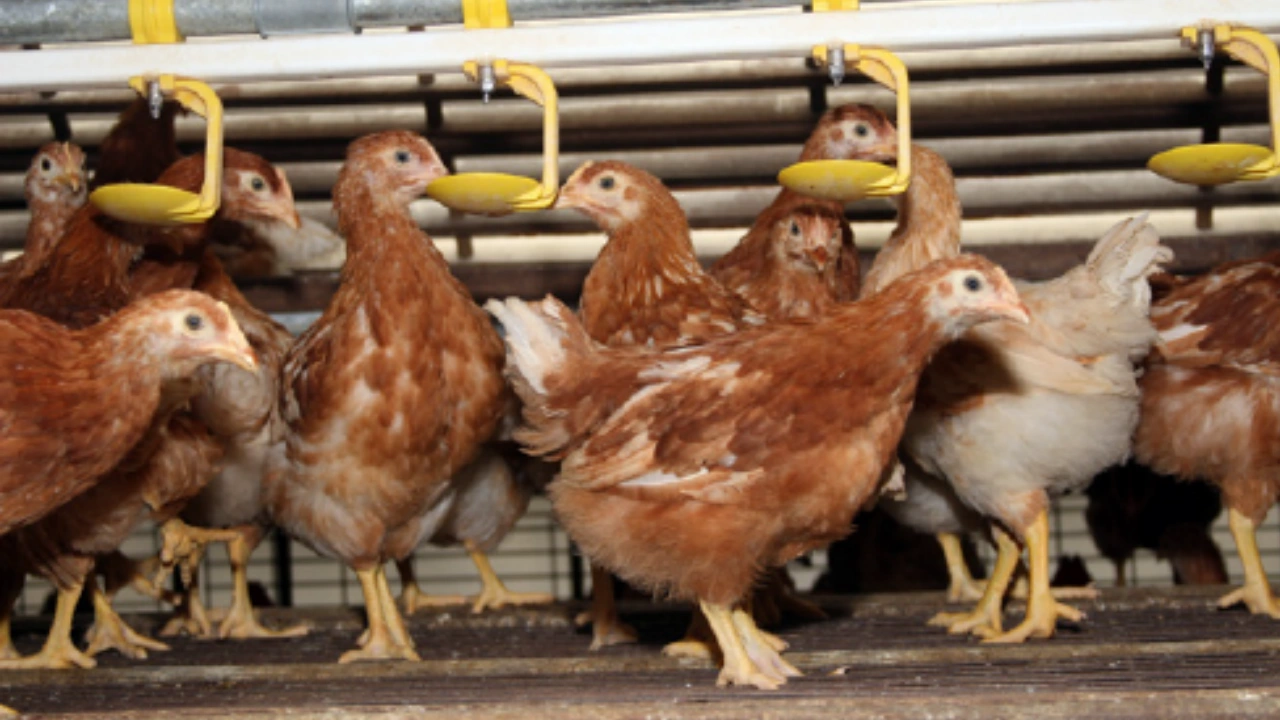
As hens enter the late peak period (typically Layer Phase 5, less than 83% production), farmers observe distinct changes in their flock:
- The 3 Increases: Body weight (slowly), egg weight, and daily feed intake.
- The 3 Decreases: Laying rate, eggshell quality (color and thickness), and the feed-to-egg ratio (efficiency).
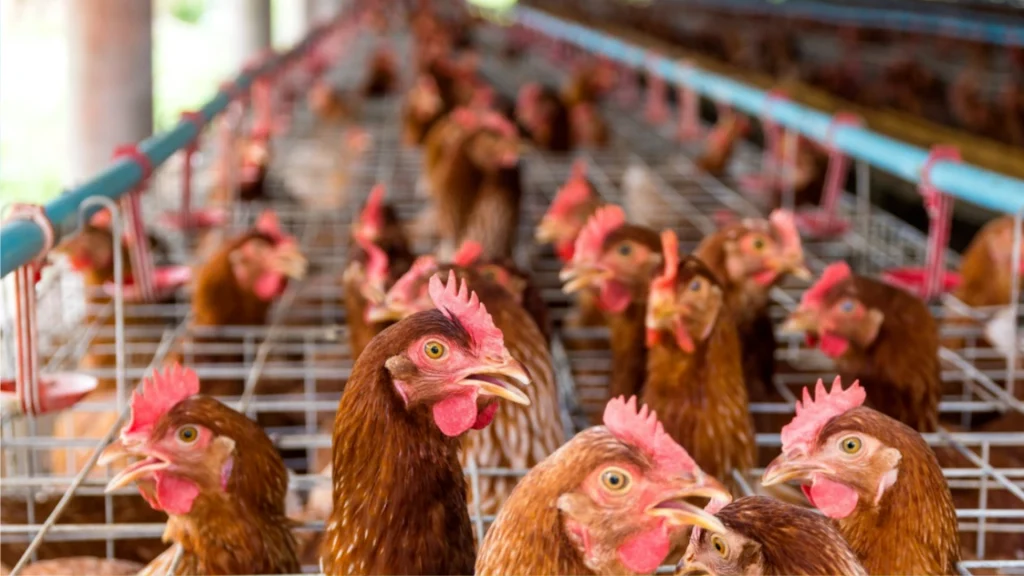
Visually, feather loss becomes more prominent. To prevent these trends from eroding your ROI, a strategic nutritional intervention is required.
2. The Science Behind the Aging Hen
Why does performance drop? It’s rooted in two major physiological shifts:
- Hormonal Decline: Decreasing estrogen levels lead to slower follicle maturation, which directly results in a lower laying rate.
- Liver Function & Vitamin D3 Activation: The liver is the “engine” of a laying hen. In older hens, liver efficiency decreases, increasing the risk of Fatty Liver Hemorrhagic Syndrome (FLHS). Crucially, the liver is responsible for activating Vitamin D3, the essential precursor for calcium absorption. When liver function wanes, eggshell quality suffers immediately, regardless of how much calcium is in the feed.
3. Data-Driven Nutritional Shifts: Peaking vs. Late Stage
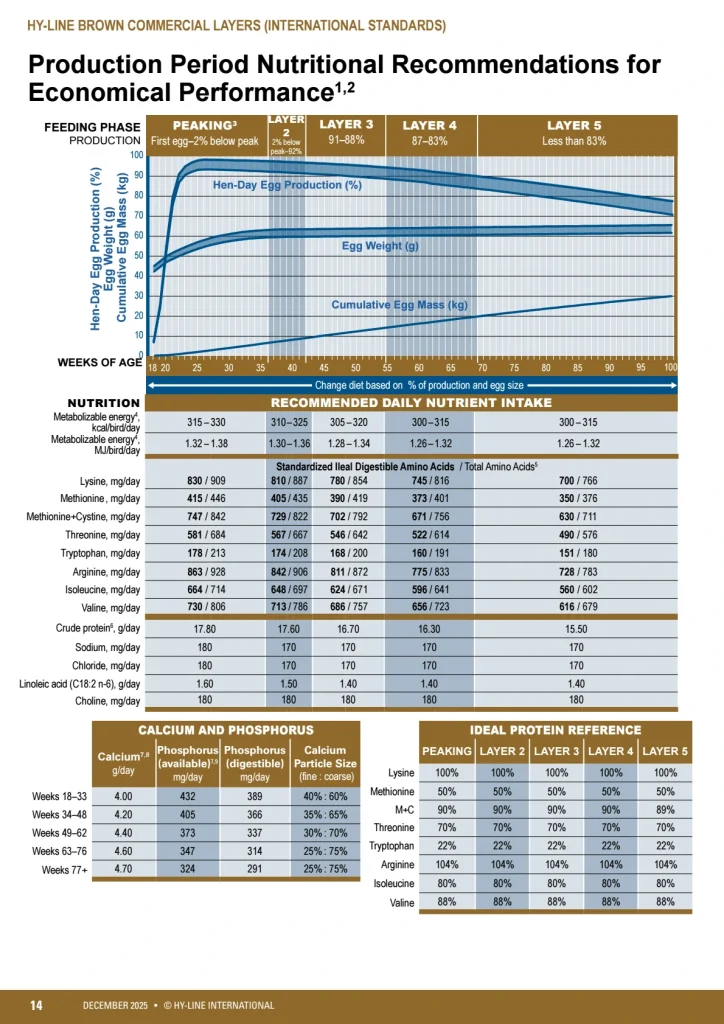
According to the Hy-Line Brown Commercial Layers Standards, the daily nutrient intake requirements for a hen in Phase 5 (77+ weeks) are drastically different from those in the Peaking phase (Weeks 18-33). To optimize performance, your formulation must reflect these exact shifts:
| Nutrient Intake (per bird/day) | Peaking Phase (Weeks 18–33) | Layer 5 / Late Stage (Weeks 77+) | Requirement Shift |
|---|---|---|---|
| Metabolizable Energy | 315 – 330 kcal | 300 – 315 kcal | Decreased |
| Crude Protein | 17.80 g | 15.50 g | – 12.9% |
| Lysine (Digestible) | 830 mg | 700 mg | – 15.7% |
| Phosphorus (Available) | 432 mg | 324 mg | – 25.0% |
| Calcium | 4.00 g | 4.70 g | + 17.5% |
Data Reference: Hy-Line Brown Commercial Layers International Standards.
4. Strategic Formulation Adjustments
To ensure your flock remains productive, consider these three actionable adjustments based on the data above:
A. Rebalancing Protein and Calcium
As the data shows, older hens require about 13% less crude protein but 17.5% more calcium. You must gradually reduce Soybean Meal to account for the drop from 17.80g to 15.50g of daily protein needs, while simultaneously increasing Limestone to hit the 4.70g daily calcium target. Tip: This adjustment must be gradual; sudden shifts can cause a sharp drop in egg mass.
B. Enhancing Calcium Bioavailability with Particle Size
Since aging hens have reduced absorption efficiency, increasing total calcium isn’t enough—you must adjust the particle size. According to standard guidelines, during the peaking phase, a calcium particle ratio of 40% fine to 60% coarse is acceptable. However, for late-stage flocks (77+ weeks), you must shift to 25% fine and 75% coarse limestone (2-5 mm). The larger particles ensure a slower, sustained release of calcium during the night when the eggshell is actively forming.
C. Prioritizing Liver and Kidney Health
To combat the natural decline in organ function, specialized additives are essential. At Egdoo Group, our M Series Premix is engineered specifically for the physiological needs of aging hens. It features:
- Precise Ca:P Ratio: Tailored specifically for late-stage skeletal and shell health (accommodating the exact drop in phosphorus and rise in calcium).
- Advanced Amino Acid Balancing: Ensuring no waste while maintaining ideal egg weight.
- Patented Fermented Herbal Technology: Our “LiZhiSu” technology (backed by two national invention patents) focuses on protecting liver and kidney health, ensuring Vitamin D3 activation remains at peak levels for optimal calcium absorption.
Conclusion
The late peak period is not the end of profitability—it is a test of precision nutrition. By focusing on liver health, adjusting the protein levels, and strictly adhering to the 75% coarse calcium rule, you can ensure your aging flock continues to deliver marketable eggs with premium shell quality.